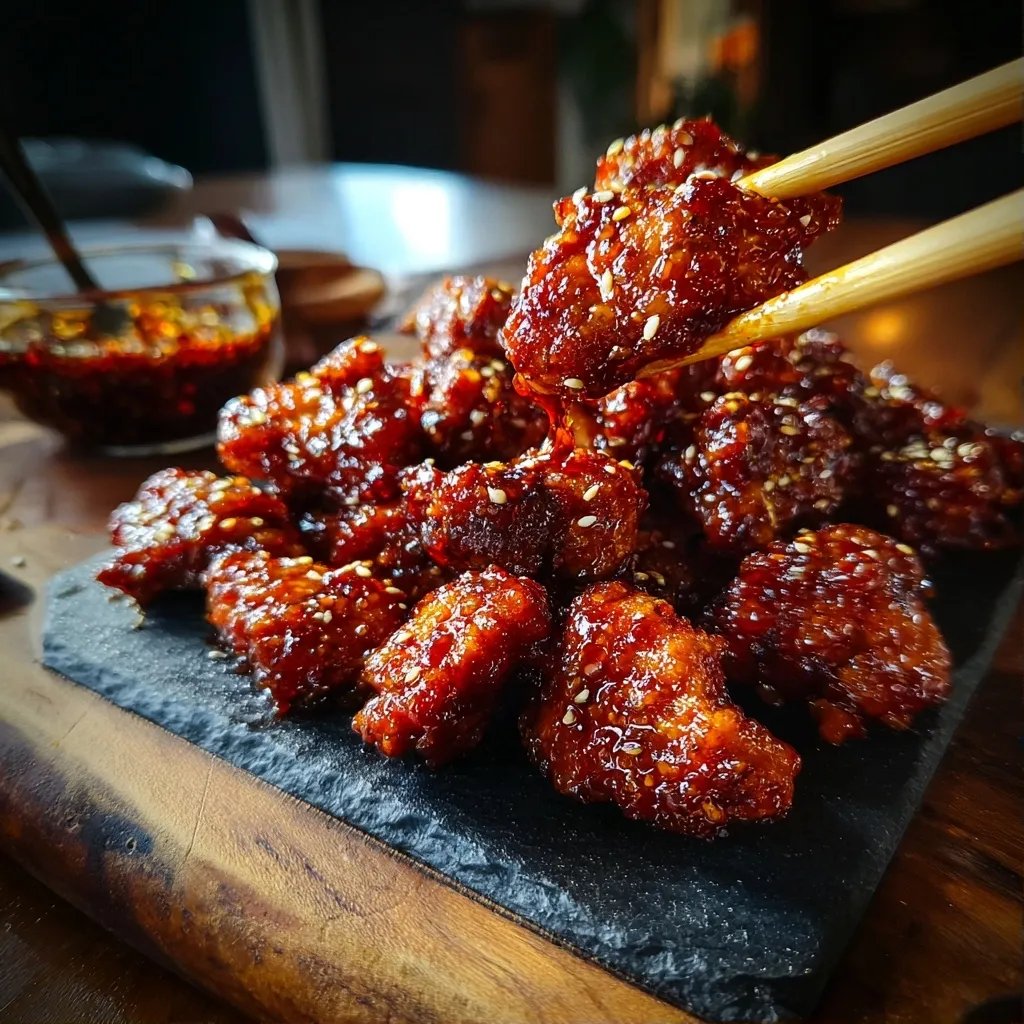
Korean Glazed Chicken
Korean Glazed Chicken
Choosing Your Ingredients
When it comes to Korean Glazed Chicken, the ingredients really shape how everything turns out. The star of the dish is, of course, the chicken. I usually go for boneless thighs because they stay juicy and cook quickly. If you happen to have drumsticks on hand, they’re also a great option, just adjust the cooking time a bit as they take longer to cook through.
Soy sauce, brown sugar, and garlic are your main players for the glaze. I love using low-sodium soy sauce to keep the dish from getting too salty. And if you don't have fresh garlic, garlic powder works in a pinch, but fresh is really the way to go if you can swing it. Green onions are a nice touch for garnish too, adding a bit of crunch.
A Quick Note on Korean Glazed Chicken
The cooking method is simple and pretty forgiving. You can bake, grill, or pan-fry the chicken. I’ve tried all three, and I personally love pan-frying because it gives the edges that lovely caramelized texture. If you're pan-frying, do it on medium-high heat and keep an eye on it, flipping when the edges turn golden brown, usually about 4-5 minutes per side.
As for the glaze, make sure it thickens nicely without burning. I find that simmering it over low heat until it gets glossy works wonders. Honestly, if it’s looking too thin, let it bubble away for an extra minute or two, but watch closely. If you notice it’s getting darker too fast, just take it off the heat and let it cool slightly.
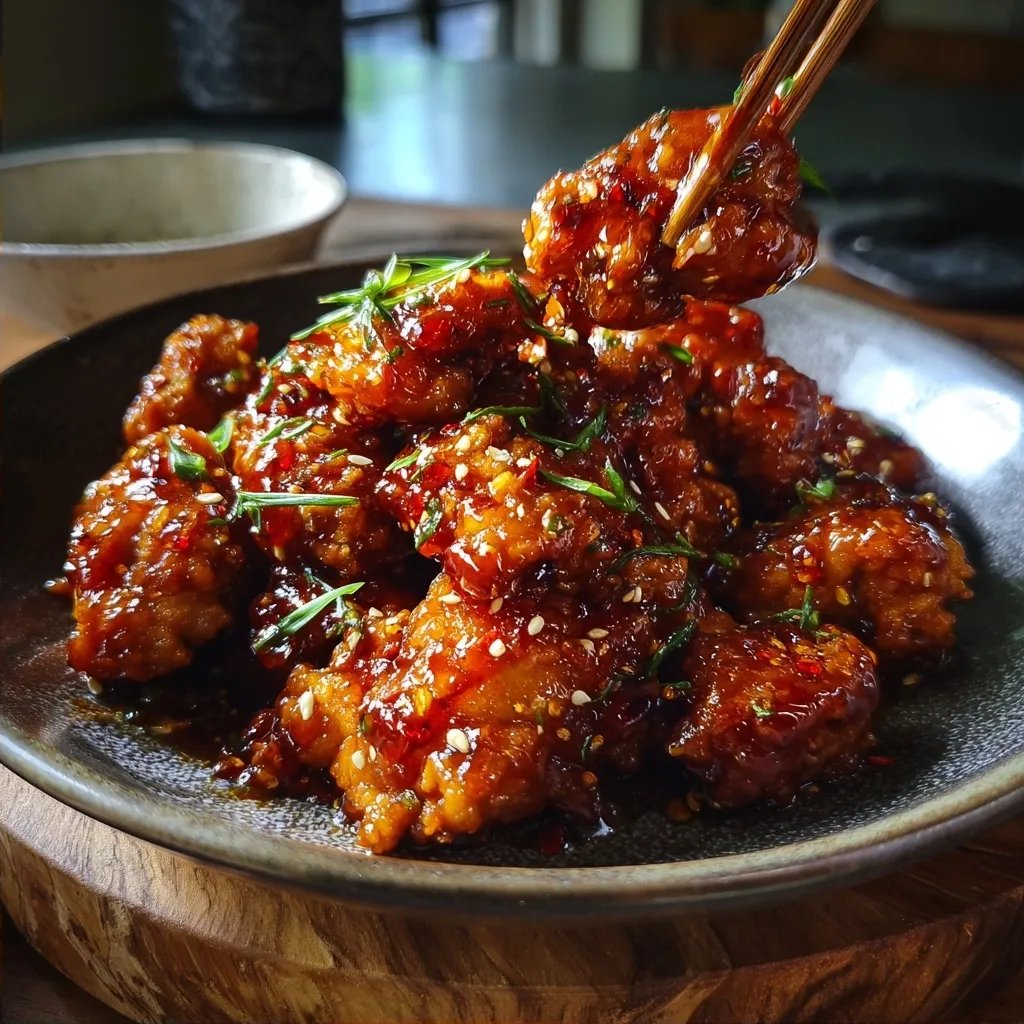
Scaling Korean Glazed Chicken for a Crowd
If you’re planning to serve a larger group, scaling this dish is easy. Just keep the ingredient ratios about the same; I often cook in batches to ensure everything stays fresh and crispy. A fun tip is to prepare a double or triple batch of the glaze and save some for later use. You can toss it on anything—grilled veggies, tofu, or even as a fun dip.
For a crowd, consider using a big roasting pan. Layer the chicken pieces with a bit of space in between to let them cook evenly. You'll want to increase the cooking time, and I’d suggest checking with a meat thermometer to make sure everything reaches 165°F. That way, no one will be left guessing if the chicken is properly cooked.